The Radical Difference Between the World's Love and God's Love

We throw the word "love" around constantly. We love our favorite coffee. We love that new song. We love our family. But what do we really mean when we say it?
For most of us, love conjures up feelings—something warm, romantic, pleasant. Something you fall into. And while that's not entirely wrong, it's dangerously incomplete. Because when we leave love as merely a feeling, it becomes something fragile, conditional, and ultimately self-serving.
The Bible presents a vision of love that looks nothing like what our culture sells us. And the contrast isn't just different—it's revolutionary.
Two Opposing Forces
In Galatians 5, the Apostle Paul lays out a fundamental conflict that exists within every human heart: the battle between the flesh and the Spirit. These aren't two neutral options we casually choose between. They're opposing forces pulling in completely opposite directions.
Paul writes: "Walk by the Spirit, and you will not gratify the desires of the flesh. For the desires of the flesh are against the Spirit, and the desires of the Spirit are against the flesh, for these are opposed to each other."
This is a daily orientation, not a one-time decision. And Paul promises that if we walk by the Spirit, we won't be ruled by the destructive patterns of the flesh.
What does that destruction look like? Paul gives us a sobering list: sexual immorality, impurity, idolatry, sorcery—things we'd expect. But then notice what comes next: enmity, strife, jealousy, fits of anger, rivalries, dissensions, divisions, envy.
Seven relational sins in a row.
The flesh isn't just about personal moral failure. It's fundamentally about relational destruction. When self becomes king, relationships fracture. Think about any broken relationship you've witnessed—a family torn apart, a church split, a friendship that imploded. Trace it back far enough and you'll almost always find someone putting themselves first.
One Fruit, Not Nine Fruits
But then Paul pivots with glorious hope: "But the fruit of the Spirit is love, joy, peace, patience, kindness, goodness, faithfulness, gentleness, self-control."
Here's something easy to miss: Paul says "fruit"—singular. Not "fruits." This isn't a spiritual buffet where you pick your favorites, loading up on peace while skipping patience and passing on love.
These nine characteristics are one integrated reality, one unified character that the Holy Spirit produces in a person. You can't genuinely have patience without love. You can't have true kindness without goodness underneath it. They all flow from the same source and come together as a package.
Notice also the contrast: the works of the flesh are plural, fragmented, scattered, produced by human striving. But the fruit of the Spirit is singular, unified, whole, and grown—not manufactured.
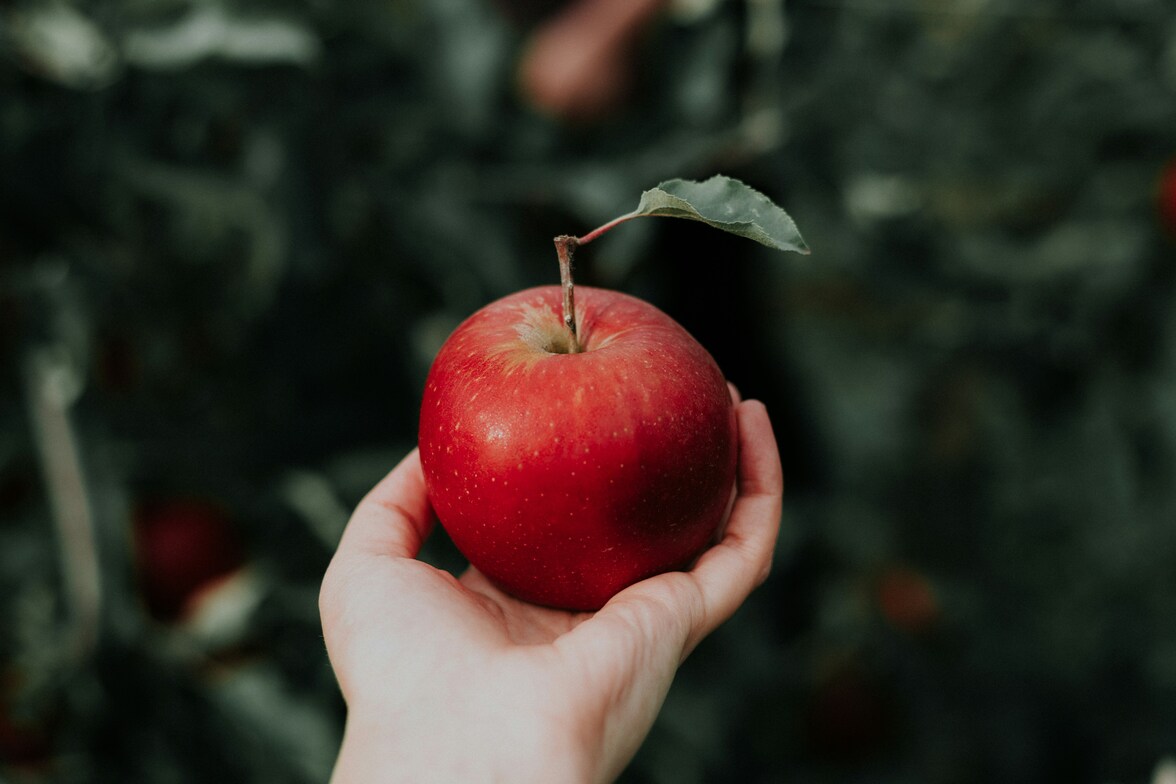
A tree doesn't grit its teeth and strain to push out apples. It grows them naturally, out of connection to its roots, to sunlight, to water. The Christian life isn't about white-knuckling your way to being more loving. It's about staying rooted.
The World's Love: Self-Centered and Conditional
So what's the difference between the world's love and God's love?
The world defines love primarily by how it makes me feel. It's love when it benefits me. It's love when you make me happy. It's love when it doesn't cost me too much.
This is love as a transaction, a contract with fine print. And when the feeling fades, or the cost goes up, or you stop meeting my needs, the "love" evaporates. Because it was never really love—it was self-interest wearing love's clothing.
In 2 Timothy, Paul describes people as "lovers of self" and "lovers of pleasure rather than lovers of God." When self becomes our highest love, relational destruction follows. People become ungrateful, heartless, brutal, unappeasable.
We live in the most connected era in human history—social media, instant communication, global reach—yet we're experiencing a loneliness epidemic. Why? Because connection built on self-interest isn't real connection. It's performance. And it collapses under the weight of genuine need.
Paul goes even further in Romans 8, saying that a self-first orientation isn't just different from God's way—it's hostile to it. The mind set on the flesh "does not submit to God's law; indeed, it cannot."
The word "hostile" is strong. It means active opposition, not just indifference. What we often call love—self-centered, conditional, transactional—may actually be in opposition to the God who IS love.
God's Love: Other-Directed and Sacrificial
But God's love begins somewhere entirely different.
The Greek word for this highest form of love is *agape*—not romantic love, not friendship love, but other-directed, sacrificial, unconditional love. This love doesn't start with "what do I get out of this?" It starts with "what does this person need?"
The ultimate example? "For God so loved the world that he gave his only Son." God didn't love us because we were lovable. Romans 5:8 says, "God shows his love for us in that while we were still sinners, Christ died for us."
While we were still sinners. Not after we cleaned ourselves up. Not once we showed potential. While we were his enemies—he loved us.
That's not a feeling. That's a costly decision.
What Love Actually Looks Like
First Corinthians 13 gives us the famous description of love, and every characteristic is other-directed:
Love is patient—I absorb the cost of your slowness without punishing you for it.
Love is kind—I actively move toward your good, not my comfort.
Love does not envy or boast—I'm not competing with you or threatened by your success.
Love is not arrogant or rude—I put your dignity above my ego.
Love does not insist on its own way—this is the direct opposite of self-love. "My way" isn't the priority. "You" are.
Love is not irritable or resentful—I don't keep score or make you pay for past offenses.
Love bears all things, endures all things—this love has load-bearing capacity. It doesn't quit when things get hard.
Most of us have experienced a moment when someone loved us like this—a parent who kept showing up when we pushed them away, a friend who sat with us at our worst, a spouse who stayed when leaving would have been easier. That love changed us, didn't it?
The Spirit Produces What We Cannot Manufacture
Here's the question: "That's a beautiful description, but I'm not like that. So now what?"
The good news? You don't have to manufacture this love. That's the entire point of calling it fruit.
A tree doesn't produce fruit by trying harder. It produces fruit by staying rooted—connected to the right source. The Holy Spirit has already been given to everyone who is in Christ. The question isn't "Can I get more of the Spirit?" but "Am I keeping in step? Am I staying close?"
Staying rooted means opening Scripture to actually encounter God, not just check a box. It means honest prayer, bringing your self-centered impulses before God and asking him to reorder your loves. It means community—because love doesn't grow in isolation. You need people to practice loving.
Your Next Step
This week, pick one person. One person in your life who's difficult to love, or one relationship where you've been loving conditionally. Ask yourself: what would it look like to love that person the way God loves me? Patient. Not insisting on my own way. Bearing. Enduring.
Not because you can conjure that love from willpower alone—but because you're connected to a Spirit who can grow it in you.
The fruit you produce reveals what you're rooted in. May what grows in you be the love of God.
-
City Light Church
Contact
Office Hours