The Declaration That Changed Everything: "It Is Finished"

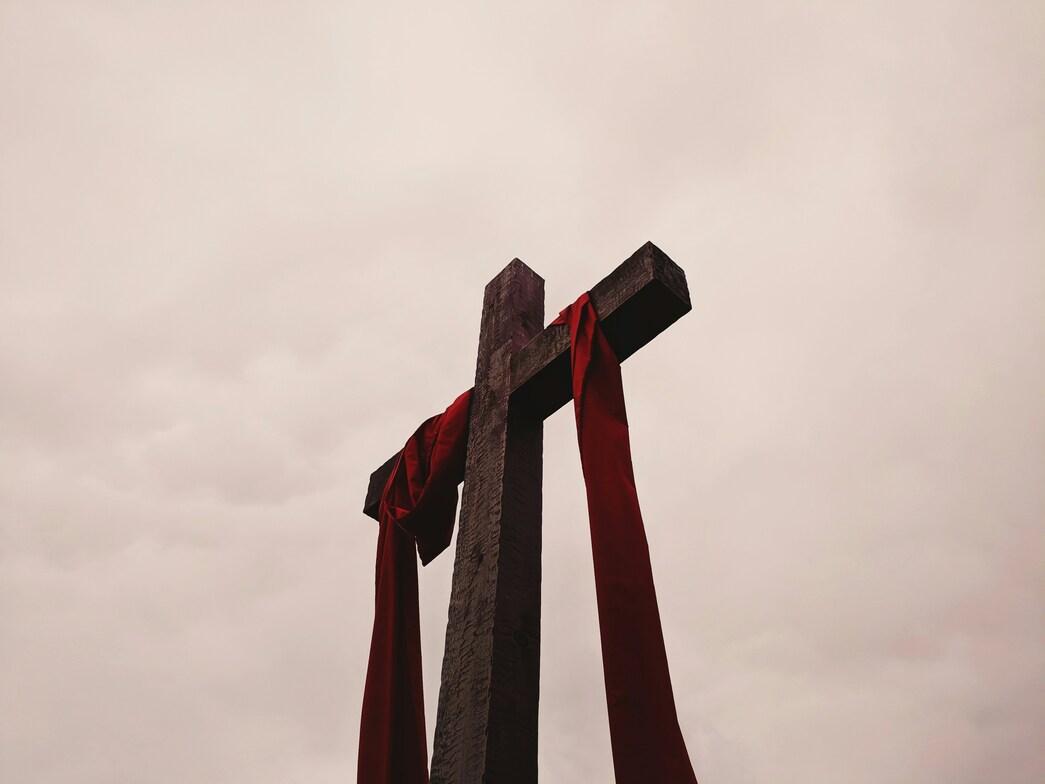
Three words. One breath. A moment that split history in two.
"It is finished."
These weren't the desperate words of someone giving up. They were the triumphant declaration of someone completing the greatest mission ever undertaken. And yet, for many of us, these words remain more theological than transformational—something we believe on Sunday but struggle to live from on Monday.
What if the freedom we've been searching for is found in truly understanding what Jesus meant when He spoke these final words from the cross?
More Than a Statement—A Receipt Marked "Paid in Full"
In the ancient world, the Greek word *tetelestai*—translated as "it is finished"—carried profound meaning. It was stamped across business receipts and legal documents to indicate that a debt had been completely satisfied. Nothing owed. Nothing outstanding. Paid in full.
When Jesus uttered this word from the cross in John 19:30, He wasn't simply announcing the end of His suffering. He was declaring the completion of a transaction that humanity desperately needed but could never afford.
Sin had created a debt we couldn't repay. No amount of good behavior, religious ritual, or moral effort could erase what we owed. The ledger was too long. The balance too high. The cost too great.
But at Calvary, Jesus absorbed the full price. He paid what we could not.
The Apostle Paul later explained it this way: the record of debt that stood against us with its legal demands was canceled, nailed to the cross (Colossians 2:14). The charges were dropped. The balance cleared. The account settled.
This is the heart of the gospel—not that we get a chance to do better, but that what needed to be done has already been accomplished. Forgiveness isn't partial. Grace isn't temporary. Salvation isn't fragile.
The work is complete.
The Exhausting Treadmill of Trying to Be Enough
Here's where things get uncomfortable for many of us.
We say we believe the work is finished, but we live like it isn't. We trust Jesus for salvation on Sunday, but by Tuesday we're back to trying to prove ourselves. We pray like God is reluctant. We serve like His approval is up for grabs. We carry guilt and shame as though the cross only partially worked.
We believe "it is finished" theologically, but functionally, we're still striving.
The result? Exhaustion. Anxiety. A constant nagging feeling that we're falling short.
But Jesus didn't say, "It is *almost* finished." He didn't say, "Your part begins now." He said, "It is finished."
This means our relationship with God is no longer performance-based. It's grace-based.
Ephesians 2:8-9 makes this crystal clear: we are saved by grace through faith, not by works, so that no one can boast. Our obedience doesn't earn God's love—it flows from it. Our service doesn't secure His approval—it expresses our gratitude for approval already given.
There's a massive difference between working *for* God's approval and living *from* God's approval.
When we work *for* approval:
- We obey out of fear
- We serve out of obligation
- We fail and spiral into shame
When we live *from* approval:
- Obedience becomes gratitude
- Service becomes joy
- Failure becomes an invitation to grace
The finished work of Jesus fundamentally changes the motivation behind everything we do. We don't draw near to God with hesitation and uncertainty. Hebrews 4:16 invites us to approach with *confidence*—not because we've earned access, but because Jesus has already secured it.
Freedom From the Weight You Were Never Meant to Carry
One of the clearest indicators that we haven't fully embraced "it is finished" is the guilt and shame we continue to carry.
Even after trusting Christ, many believers live as though forgiveness is theoretical but not personal. We believe Jesus forgives others easily, but struggle to believe He has fully forgiven *us*. We confess the same sins repeatedly, not because confession is required for forgiveness, but because we can't quite believe the forgiveness is real.
But the cross doesn't leave room for partial forgiveness.
Romans 8:1 declares: "There is now *no* condemnation for those who are in Christ Jesus." Not less condemnation. Not delayed condemnation. No condemnation.
When Jesus finished the work, He didn't just address sin in general—He dealt with your specific sins. The ones you're most ashamed of. The patterns you can't seem to break. The failures you replay in your mind at 2 a.m.
Fully. Finally. Completely.
Guilt says, "You've done something wrong." Shame says, "There's something wrong with *you*."
The finished work of Jesus speaks to both. Guilt is answered by forgiveness. Shame is answered by identity.
At the cross, Jesus doesn't just cancel our debt—He restores our dignity. He doesn't merely erase our past—He gives us a future. He doesn't just forgive what we've done—He redefines who we are.
And this changes everything.
When guilt is gone, we no longer live in fear of punishment.
When shame is broken, we no longer hide from God or others.
When striving ends, obedience becomes joyful instead of exhausting.
This doesn't mean we never sin again. It means sin no longer defines us. We confess not to earn forgiveness, but because forgiveness has already been secured. We repent not to stay in God's good graces, but because grace has already claimed us.
Living in Light of a Finished Work
So what does it actually look like to live from the finished work of Jesus rather than for God's approval?
It means laying down what Jesus has already carried.
It means releasing what He has already forgiven.
It means stopping the striving where He has already finished.
It means approaching each day not with the question, "Am I doing enough?" but with the confidence, "Jesus has done everything."
It means serving out of gratitude rather than guilt.
It means resting in grace rather than racing for acceptance.
It means living as someone who is already loved, already forgiven, already secure.
The cross settles the question of whether God loves us.
The cross answers the fear that we are not enough.
The cross silences the lie that we must keep proving ourselves.
When Jesus said, "It is finished," He meant everything that stood between you and God—every sin, every failure, every reason for shame—was dealt with completely.
And that's not just good theology. That's an invitation to freedom.
The Foundation of Everything That Follows
"It is finished" is not the end of the story—it's the foundation for everything that comes next.
Because a finished work on the cross leads to an empty tomb. A completed payment leads to a confirmed victory. And a Savior who declares "It is finished" on Friday is the same Savior who walks out of the grave on Sunday.
The cross tells us the work is done.
The resurrection proves that death, sin, and fear no longer have the final word.
And that means we can live differently—not striving for what's already been given, but resting in what's already been finished.
Three words from a cross two thousand years ago still echo today:
It is finished.
The debt is paid. The work is complete. And you are free.
-
City Light Church
Contact
Office Hours