When Hope Feels Distant

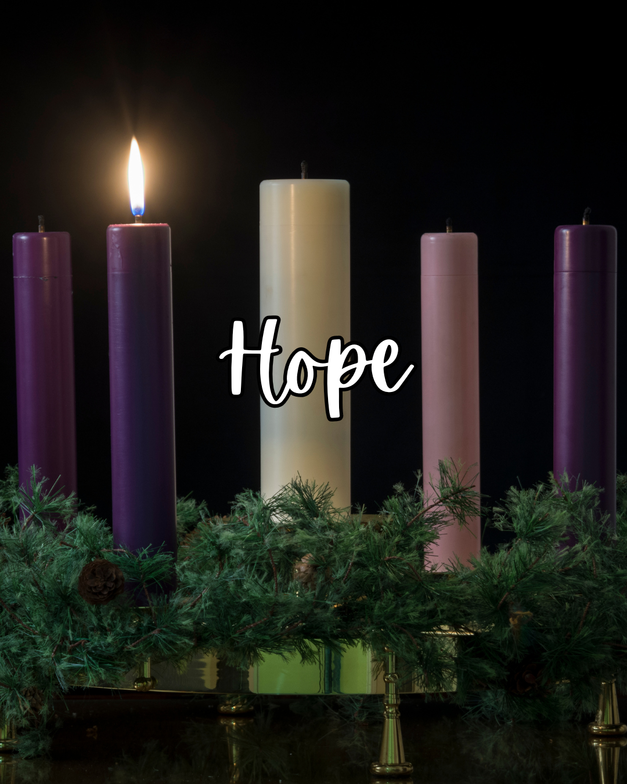
The anticipation of Christmas carries a word many of us barely understand: Advent. We recognize the wreaths, the candles, the countdown calendars. But do we truly grasp what we're counting down to?
Advent comes from the Latin word *adventus*, meaning "coming" or "arrival." This ancient practice, dating back to the fourth century, was never meant to be just a festive tradition. Early Christians set aside these weeks to fast, reflect, and pray—to prepare their hearts for celebrating the birth of their Savior. By the ninth century, the church had established four weeks of Advent, each representing something profound: Hope, Peace, Joy, and Love.
But let's start with something uncomfortably honest: hope doesn't always come easily.
When Hope Feels Deferred
There's a verse in Proverbs that cuts straight to the heart: "Hope deferred makes the heart sick" (Proverbs 13:12). The Hebrew word for "deferred" means to push aside or delay. It's that feeling when you've prayed for healing for years, and it seems like God is pushing your request to the side. When disappointment becomes familiar. When the addiction cycle repeats. When anxiety returns like an unwelcome houseguest.
Psychologist Martin Seligman conducted a study in the 1960s that revealed something chilling about repeated disappointment. He discovered that when subjects learned they couldn't escape difficult circumstances, they eventually stopped trying altogether. They learned hopelessness.
Some of us live there. We've been hurt again, disappointed again, let down again. We stop expecting. We stop hoping. Our hearts grow sick with deferred dreams.
But what if the problem isn't that hope doesn't exist—but that we've been looking for it in all the wrong places?
Hope Has a Name
The Gospel of Matthew records an angel delivering a message that would change human history: "She will bear a son, and you shall call his name Jesus, for he will save his people from their sins" (Matthew 1:21).
Here's the revolutionary truth: our hope is not in a *what* but in a *who*.
The name Jesus literally means "God saves." It wasn't chosen randomly or for its pleasant sound. It was a declaration of identity and purpose. And there's something uniquely powerful about this name. Paul wrote that God "bestowed on him the name that is above every name, so that at the name of Jesus every knee should bow, in heaven and on earth and under the earth" (Philippians 2:9-10).
Throughout Scripture, Jesus is called:
- Our Hope (1 Timothy 1:1)
- Our Blessed Hope (Titus 2:13)
- Our Living Hope (1 Peter 1:3)
The name of Jesus breaks every curse and exposes every lie. It's more powerful than any sickness and stronger than any addiction. When we speak the name of Jesus, darkness trembles and demons flee.
Hope isn't an optimistic feeling or a positive mindset. Hope has a name, and His name is Jesus.
Hope Has Perfect Timing
But here's where many of us struggle: if Jesus is our hope, why does He sometimes feel so distant? Why the waiting? Why the silence?
Over 300 prophecies foretold Jesus' coming—born of a woman, born of a virgin, born in Bethlehem. But when did He actually arrive? Paul tells us: "When the fullness of time had come, God sent forth his Son" (Galatians 4:4).
Between the Old and New Testaments stretched 400 years of prophetic silence. Four centuries without a word from God. Imagine the disappointment. The deferred hope. Generations lived and died waiting.
But God wasn't absent—He was working.
During those silent centuries:
- The Socratic method emerged, creating a culture that asked questions and sought truth
- The Old Testament was translated into Greek, making Scripture accessible across cultures
- Alexander the Great spread one common language throughout the known world
- The Jewish diaspora scattered God's people to every corner of civilization
- Rome built roads connecting the empire like never before
For the first time in human history, the world was asking big questions, Scripture was available in a common language, and a connected infrastructure existed to spread a message rapidly.
When the moment was perfect—not a second early, not a moment late—God sent His Son.
If it's not God's time, you can't force it. When it is God's time, you can't stop it.
Hope Is Coming Again
Advent doesn't just look backward to a baby in a manger. It points forward to a glorious return.
The first time Jesus came wrapped in cloth, helpless and vulnerable. The next time He's coming wrapped in glory, powerful and victorious. The first time as a baby; the next time as a conquering King on a horse.
Paul wrote: "For the Lord himself will descend from heaven with a cry of command, with the voice of an archangel, and with the sound of the trumpet of God. And the dead in Christ will rise first. Then we who are alive, who are left, will be caught up together with them in the clouds to meet the Lord in the air, and so we will always be with the Lord" (1 Thessalonians 4:16-17).
Hope is coming again.
The Tree of Life
Remember that verse about deferred hope making the heart sick? It doesn't end there: "Hope deferred makes the heart sick, but a longing fulfilled is a tree of life" (Proverbs 13:12).
The Tree of Life first appeared in Genesis, representing unbroken fellowship with God—a fellowship lost through sin. But in Revelation, it returns: "Then the angel showed me the river of the water of life, bright as crystal, flowing from the throne of God and of the Lamb... on either side of the river, the tree of life with its twelve kinds of fruit... The leaves of the tree were for the healing of the nations. No longer will there be anything accursed" (Revelation 22:1-3).
No more crying. No more mourning. No more pain. All things made new.
The Growth of Hope
Perhaps the most profound shift happens when our hope stops being about outcomes and becomes about character—not what we want, but who God is.
Because hope has a name: Jesus.
Hope has perfect timing: God's.
Hope is coming again: soon.
This Advent, as you light the candles and count the days, remember you're not just celebrating a historical event. You're declaring that hope is not dead. It's not deferred forever.
Hope has arrived, and Hope is coming again.
-
City Light Church
Contact
Office Hours