The Hidden Path

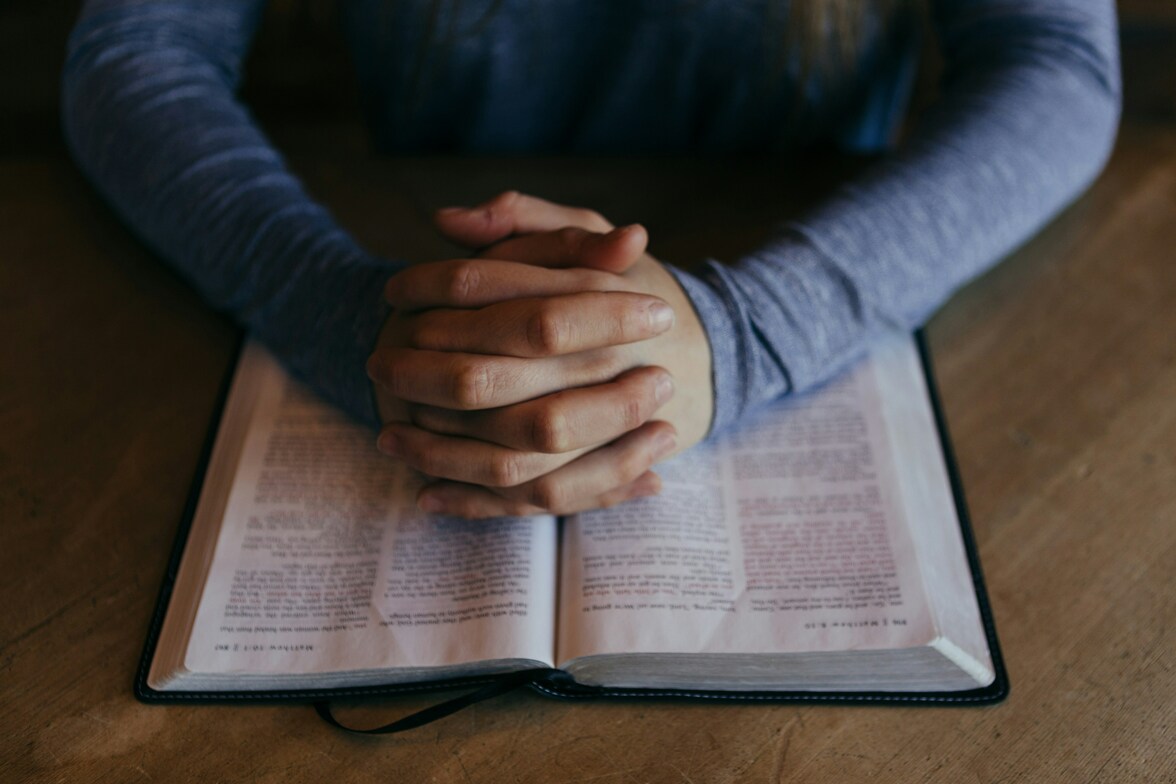
There's a secret many Christians carry, buried beneath smiles and Sunday morning greetings: prayer feels impossibly hard.
Not just difficult in the way waking up early is difficult, but genuinely unnatural. Awkward. Like learning to write with your non-dominant hand while someone watches. We sit down with the best intentions, and within moments our minds scatter like startled birds. We feel guilty about it. We assume everyone else has figured out some spiritual secret we're missing.
But what if the struggle isn't a sign of spiritual failure? What if it's actually the beginning of something profound?
The Discipline No One Wants to Talk About
When the disciples watched Jesus pray, they didn't see someone casually chatting with God like old friends catching up over coffee. They saw something so compelling, so transformative, that they interrupted Him with an urgent request: "Teach us to pray."
These were religious men. They knew prayers. They'd recited them since childhood. Yet watching Jesus, they realized they didn't actually know how to pray—not really.
This should comfort us immensely. If the people who walked with Jesus needed to learn prayer as a skill, why do we assume it should come naturally to us?
Richard Foster, in his classic work on spiritual disciplines, cuts through our modern assumptions with surgical precision: "Superficiality is the curse of our age." Prayer isn't instinct. It's learned. Like carpentry, like playing an instrument, like any craft worth mastering.
The brain doesn't naturally drift toward focus, peace, or intercession. Left to its own devices, it gravitates toward survival mode—scanning for threats, rehearsing anxieties, optimizing efficiency. This is biology, not spiritual deficiency.
The Science of Transformation
Here's where ancient wisdom and modern neuroscience shake hands in remarkable agreement.
Neuroplasticity—the brain's ability to change and rewire itself—reveals something stunning: whatever you practice, you literally become. There's a principle that states "neurons that fire together, wire together." Your repeated patterns carve pathways in your brain like water cutting channels through stone.
Imagine your mind as a field of tall grass. Worry is a path you've walked ten thousand times. It's wide, smooth, almost automatic. Your feet find it without thinking. But prayer? That path is overgrown, barely visible, choked with weeds. Walking it feels exhausting.
When we call prayer a "discipline," we're not shaming anyone. We're acknowledging reality: you're picking up a machete and cutting a new trail. Of course it's hard. Of course it feels unnatural. You're literally rewiring your brain.
Research from the University of Pennsylvania shows that during contemplative prayer, blood flow increases to the prefrontal cortex—the area responsible for focus and decision-making—and the anterior cingulate cortex, which regulates empathy and emotion. Meanwhile, activity in the amygdala, the brain's fear center, decreases.
Translation: Prayer doesn't just change what you think about. It changes how you think. How you feel. How you respond to the world.
The Path Forward
Romans 12:2 offers the blueprint: "Do not be conformed to this world, but be transformed by the renewal of your mind." Transformation happens through renewal. And renewal happens through practice.
So how do we actually do this?
Start with silence, not words. Before launching into requests and confessions, practice 30 to 60 seconds of simple stillness. No agenda. No performance. Just attention directed toward God. This isn't wasted time—it's training your nervous system to settle, retraining your attention to focus. "Be still, and know that I am God" isn't poetry. It's instruction.
Choose an anchor prayer. Select one short prayer to repeat daily. The same words, spoken with intention: "Lord, have mercy." "Jesus, I trust You." "Your will, not mine."
This isn't vain repetition—it's formation. Remember the tax collector in Luke 18:13, who could only beat his breast and whisper, "God, be merciful to me, a sinner." His simplicity wasn't poverty; it was purity. When you repeat the same prayer day after day, you're not being uncreative. You're carving that new path deeper.
Embrace the prayer of presence. When words fail—and they will—sit quietly. Let silence do its work. Romans 8:26 reminds us that the Spirit intercedes with groanings too deep for words. Sometimes the most honest prayer is simply showing up and saying, "Here I am, Lord."
Create a simple rule of life. Not an ambitious spiritual overhaul, but a sustainable structure. Choose when (a specific time of day), where (a particular place), and how long (short is perfectly fine). Five minutes every morning in the chair by the window. That's not too little—it's a beginning.
Daniel prayed three times daily at his window facing Jerusalem. Not because he was extraordinarily spiritual, but because he'd built a structure that held him when motivation failed.
The Long View
Here's what happens over time: Intercessory prayer—praying for others—strengthens the parts of your brain tied to empathy and compassion. You're not just obeying a biblical command; you're training your brain to love.
Prayer doesn't just change how you see people. It changes how you feel toward them. The colleague who irritates you, the family member who disappoints you, the neighbor whose politics make you crazy—when you pray for them consistently, something shifts. Not instantly. Not magically. But genuinely.
Over time, prayer literally makes us more like Jesus.
When prayer feels unnatural, it's not failure. It's formation beginning. You're in the awkward, exhausting, essential work of cutting a new path. Keep walking it. Keep speaking into the silence. Keep showing up even when it feels like nothing is happening.
Because beneath the surface, in ways you cannot see or measure, everything is changing. Neurons are firing and wiring. Fear centers are quieting. Compassion is growing. The mind is being renewed.
And that renewal? That's transformation. That's the deep and highest work of the human spirit. That's prayer doing what only prayer can do—changing us from the inside out, one difficult, awkward, holy moment at a time.
-
City Light Church
Contact
Office Hours