Beyond the Noise

In our modern world, we find ourselves perpetually caught in a whirlwind of activity. The holiday seasons come and go, leaving us exhausted rather than refreshed. We're surrounded by noise, hurry, and crowds—trapped in what we might call "busyness" or "manyness." The very idea of stopping, of resting, feels almost rebellious in a culture that glorifies the grind.
Yet there's an ancient practice that offers us a different way—a rhythm that moves against the current of our frantic lives. It's called meditation, and it's far different from what many of us might imagine.
Clearing the Confusion
When we hear the word "meditation," certain images might flood our minds: perhaps the flower children of the 1960s and 70s, people sitting cross-legged chanting mantras, or vague new age philosophies. Many assume that meditation belongs exclusively to Eastern religions, something foreign to Christian spirituality.
But this assumption misses a profound truth: Christian meditation and Eastern meditation are worlds apart.
Eastern meditation typically aims to empty the mind, to detach from the world, and ultimately to lose one's sense of personal identity and individuality. Christian meditation, by contrast, seeks to fill the mind—specifically, to fill it with the presence and truth of God. While it may begin with a kind of detachment (a stopping, a Sabbath from busyness), it quickly moves beyond that into deep attachment with God.
Jesus himself warned about the danger of emptiness without fullness. He told a story about a man who was emptied of evil but not filled with good. The evil spirit returned with seven others more wicked than itself, and the man's final condition was worse than his first. Emptiness alone is not the goal. Christian meditation moves us toward a richer wholeness, a deeper understanding of God's rhythm for our daily lives.
The Heart of the Practice
The Psalmist captures the essence of Christian meditation beautifully: "May the words of my mouth and the meditation of my heart be pleasing to you, O Lord, my rock and my redeemer" (Psalm 19:14).
This isn't a one-time spiritual exercise. Meditation is about formation—the gradual shaping and deepening of our relationship with God. It's about giving ourselves more fully to Jesus, not as a religious obligation, but as apprentices learning from a master.
Richard Foster, in his classic work on spiritual disciplines, describes meditation as growing into "a familiar friendship with Jesus." Through meditation, we sink into the light and life of Christ and become comfortable in that position. The old hymn lyrics, "He walks with me and He talks with me," transition from sentimental poetry to straightforward description of daily reality.
What meditation does is create emotional and spiritual space where Jesus can build a sanctuary in our hearts. Consider the invitation in Revelation 3:20: "Look! I stand at the door and knock. If you hear my voice and open the door, I will come in, and we will share a meal together as friends."
Remarkably, this verse was originally written to believers, not unbelievers. Jesus desires what one writer called "a perpetual Eucharist feast in the inner sanctuary of the heart"—a never-ending fellowship with those who follow him. Meditation opens that door.
This inward fellowship transforms our inner personality. We cannot maintain constant communion with Jesus and remain unchanged. As our ever-present teacher, he leads us into "righteousness and peace and joy in the Holy Spirit" (Romans 14:17). Everything foreign to his nature, we'll not only need to release—we'll want to let go.
A Practical Path: Meditating on Scripture
Understanding why we meditate helps us move into how we meditate. And here's an important truth: it's impossible to learn meditation from reading about it alone, just as you can't learn to swim from a book. We learn to meditate by meditating.
One powerful approach is what's traditionally called *Meditatio Scripturarum*—meditation upon Scripture. This differs significantly from Bible study. Studying involves exegesis, analysis, word studies, and gathering information. Meditating involves internalizing and personalizing the passage, allowing it to work on us rather than us working on it.
Three key aspects guide this practice:
Interruption – This is about stopping, slowing down, and allowing God to interrupt our regularly scheduled program. It's the intentional stepping away from busyness to create space and time for stillness. This interruption is your first step into meditation, aligning your life rhythms with those of Jesus to find moments of peace, ease, calm, and rest.
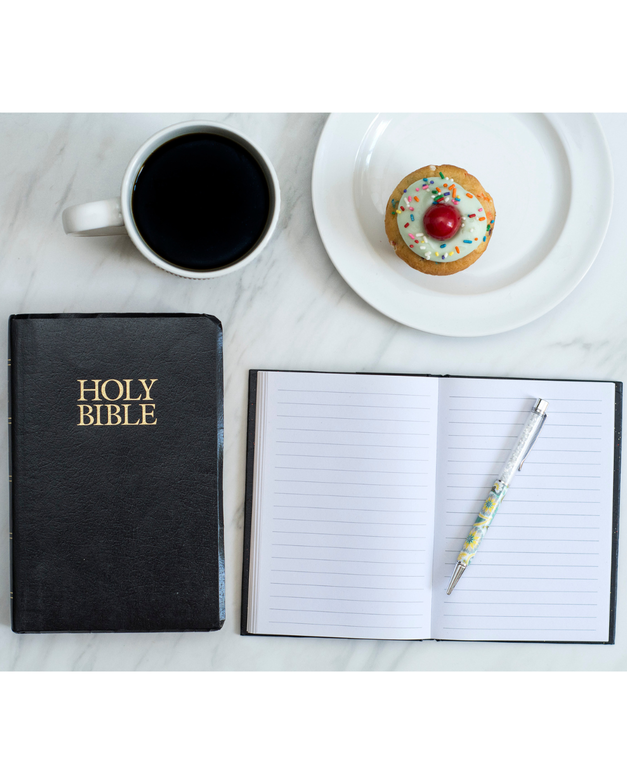
Intuition – Take up Scripture, but resist the pressure to consume large portions quickly. Pay attention to words or phrases that feel highlighted to you by the Holy Spirit. Stop and think on those words. Pray about them. Journal about what you're reading and feeling. Let the Spirit guide you into deeper understanding.
Imagination – Apply your imagination to the text. Use all your senses as you read. What do you see, hear, smell, or feel in the story? This isn't about making things up; it's about allowing the stories to come alive so you can connect on a deeper level. Jesus himself taught in parables—stories that captured people's imaginations.
Alexander Whyte beautifully described this imaginative reading: "At one time, you are the publican; at another time, you are the prodigal; at another time, you are Mary Magdalene; at another time, Peter in the porch...Till your whole New Testament is all over biographic of you."
Beginning the Journey
As you embark on this practice, remember a few essential principles:
Start small. Begin where you are, not where you think you "should" be. Think subtraction, not addition—don't squeeze meditation into an already overloaded schedule. Instead, ask what you can remove. Formation is about less, not more.
Understand that you get what you put in. The more fully you give yourself to this practice, the more life-changing it becomes. Expect the J-curve: like learning any new skill, you'll likely get worse before you get better.
Most importantly, remember that there is no formation without repetition. Spiritual formation is slow, deep, and cumulative work. It takes years, not weeks.
The Greater Vision
These spiritual practices aren't about ticking off religious boxes or becoming "better" Christians in some competitive sense. They're about becoming more aware of what God is doing around us. They're about cultivating sincere gratitude, emotional health, and delight in God's goodness.
When we align our life rhythms with the rhythm of the Creator, we experience not just life, but life to the fullest. We discover that resting and stopping aren't signs of weakness—they're countercultural acts of faith that open us to transformation.
May the words of our mouths and the meditation of our hearts be pleasing to the Lord, our rock and our redeemer. In the stillness, in the stopping, in the sacred space we create, Jesus waits to build his sanctuary within us—and to walk with us through every moment of our days.
-
City Light Church
Contact
Office Hours